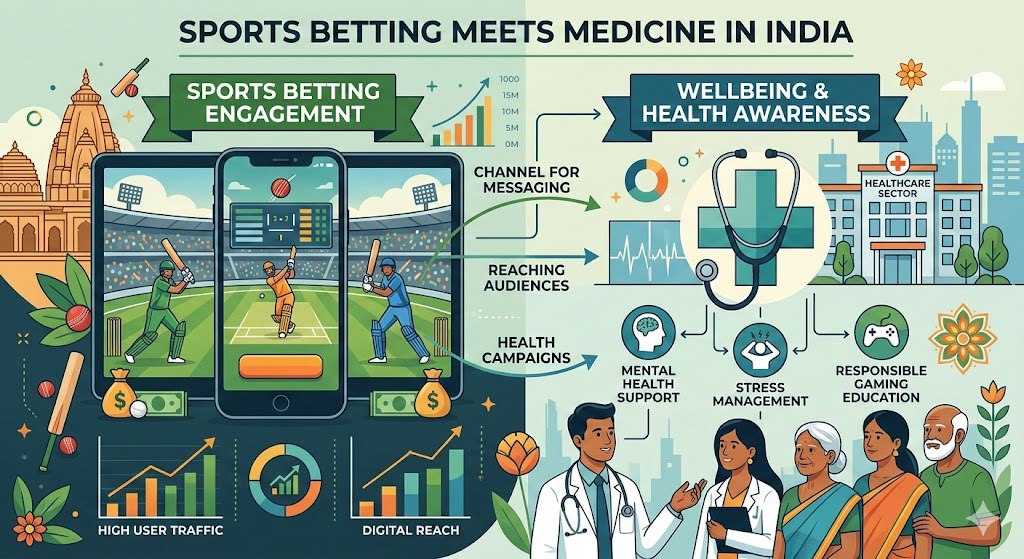
Sports Betting Meets Medicine in India
In recent months, a buzz has been growing about how sports betting platforms like baterybet are finding unexpected links with the healthcare sector in India. Traditionally, sports betting and medicine operate in entirely separate universes — one driven by entertainment and odds, the other by patient care and public health outcomes. Yet the two are increasingly intersecting in ways that are surprising even to long-time observers.
One of the big reasons this conversation has started? India’s enormous online sports betting audience. Platforms such as baterybet have become household names for many bettors across the country, attracting huge traffic and attention in the digital space. That same online reach has meant that health campaigns — whether about mental health, well-being, or addiction support — are starting to see value in tapping into these massive communities where millions of everyday users are already engaged.
This integration isn’t about betting apps offering medical advice. Rather, it’s about finding channels to spread awareness about health topics. Casinos and betting brands know their platforms have high engagement, and some health initiatives are experimenting with messaging where audiences already are. In a country as vast and diverse as India, this can open up new avenues to communicate about healthcare issues — from heart health to stress management — to people who might not otherwise see such campaigns.
Of course, plenty of people worry about the negative side of betting. India’s legal framework for online gambling remains a patchwork, and rules vary widely from state to state, making the sector a bit of a grey zone in general. That uncertainty is exactly why public-health outreach matters: as sports betting becomes more embedded in everyday life, tying in responsible-gaming and wellbeing support directly where users spend time could have real benefits.
So next time you see a sports betting ad in India, don’t be surprised if it’s paired with a healthcare message — what once seemed unlikely is now slowly becoming part of a broader conversation about how digital platforms can influence not just games but wellbeing too.